Dublin's summit week and the cost exchange: what restricted skies teach event and city security
Dublin restricted its skies for an EU summit while drones disrupted a Warsaw landing and an air base in England. The lesson for events, cities and critical sites is the cost exchange, and how to flip it by acting earlier.
The short answer
Between 11 and 14 November 2026, Dublin hosted more than 50 European leaders under what was reported as the largest policing and security operation An Garda Síochána has ever run. Temporary restricted airspace covered the city, counter-drone systems were deployed and Garda drones flew near the venue. On 13 November, a drone in the approach path forced a passenger aircraft to abort its landing at Warsaw Chopin Airport, and US Air Force security forces responded to suspected drone activity over RAF Lakenheath in England.
The common thread is the cost exchange. An aircraft that costs very little can force a capital, an airport or an air base to spend heavily, at short notice, every time. The answer is to move protection earlier, so it costs less than the threat and arrives before it.
What happened in the week to 14 November
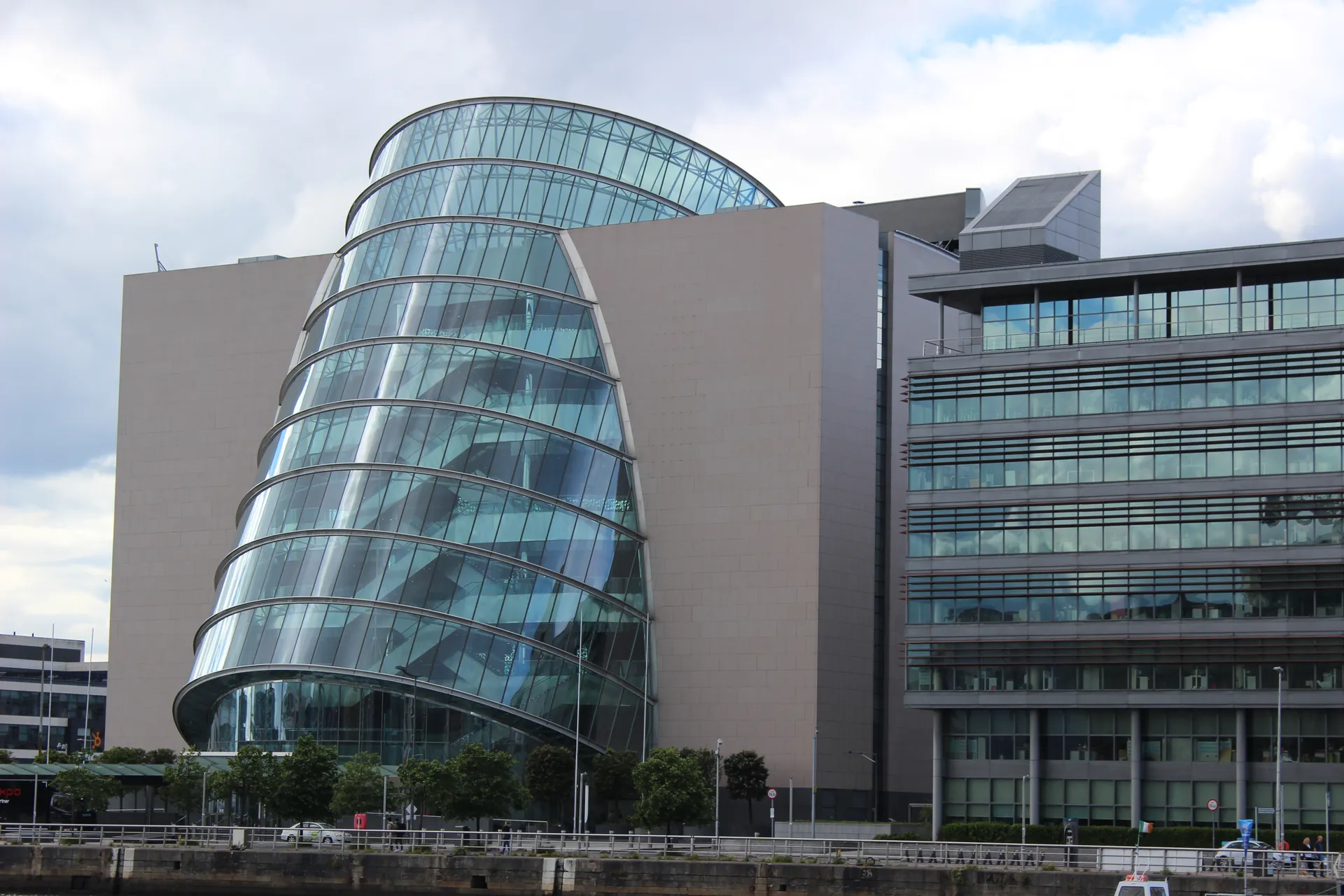
Dublin. As part of Ireland's EU Presidency, more than 50 leaders gathered for the European Political Community summit on Thursday 12 November, followed by an informal meeting of the European Council on Friday 13 November, with a security zone around the Convention Centre. The Press Association, as published by The Independent, described the week as the largest policing and security operation ever implemented by An Garda Síochána, larger than any previous US presidential visit. [1]
The Irish Aviation Authority issued temporary restricted airspace notices covering Dublin from 9am on Wednesday 11 November until noon on Saturday 14 November, including drones. Gardaí described them as the largest and widest such notifications, issued at short notice for operational purposes. [2][3] Gardaí told RTÉ that counter-drone systems were in place to detect unauthorised drones and locate their operators, and that Garda drones were deployed near the Convention Centre. Air and maritime exclusion zones were also in force. [1][4]
Warsaw. On Friday 13 November, an aircraft flying from Prague was at low altitude on approach to Warsaw Chopin Airport when a drone appeared in its path. The crew stopped the descent, climbed away, held over the city and landed on a second approach. Airport spokesperson Piotr Rudzki confirmed the incident and said flight safety was not compromised and that this was standard procedure. [5][6]
Lakenheath. Late on 13 November, the US Air Force in Europe said security forces at RAF Lakenheath in eastern England had responded to suspected unauthorised drone activity, and that no personnel, aircraft or infrastructure were affected. The UK Ministry of Defence later said police were deployed to assist and the situation was quickly resolved. Reports did not establish who flew the drones or whether any were intercepted. [7][8]
The background rate. The FAA's public files of reported drone sightings near US airports list roughly 320 reports for January to March 2026, roughly 600 for April to June and roughly 570 for July to September (rows counted from the FAA spreadsheets on 17 November 2026). [9]
The cost exchange
Military planners already know the arithmetic. In March 2026, Forecast International put it plainly: every $30,000 Shahed drone that forces the US or a partner to fire a $4 million PAC-3 missile is a massive win for Iran, because Iran has far more cheap drones than its opponents have expensive interceptors. [10]
The same logic runs at a smaller scale over cities and airports. In the week to 14 November, small drones, or the risk of them, meant a go around over Warsaw, a security response at an air base in England and restricted airspace over a capital from Wednesday to Saturday. Each response may well have been right on the day. Each also costs aircrew time, police hours, delayed passengers and attention that the threat did not have to pay for.
Protection that only begins when something is already in the air will always pay the higher price. The way to flip the maths is to spend earlier and smaller: understand the site before the event, set the conditions that matter, and keep a practised path to act.
Time is the advantage
Dublin's summit had a fixed date and a fixed venue, both known in advance. That is the best case for left of bang work, the period before an incident when indicators can still be found and acted on. Warsaw and Lakenheath had minutes.
For a city, a venue or a critical site, the useful questions are about time:
- What is normal here? A baseline of activity around a protected location, built before the event, makes an unusual pattern visible early.
- What happens again? Recurring presence near a perimeter is often more telling than one sighting.
- Who decides, and how fast? A named decision maker, a short log and an agreed path with the authority that can act save the first hour.
- What is the cheapest response that works? Restrictions announced in advance, patrols placed by evidence and lawful interception held in reserve cost less than reaction at scale.
One roof, from intelligence to protection to production
SAS Global X is built around that sequence, with three operating companies under one engagement.
ARC ONE Intelligence provides RF intelligence and early warning for physical security. It turns wireless observations into operational intelligence, helping security teams understand activity around a protected location, investigate recurring device presence and receive alerts when configured conditions are met. Temporary event monitoring and critical infrastructure protection are among its named applications. It adds an RF intelligence layer alongside existing cameras, access control and security personnel. arconeintel.com
Silverback Autonomous Systems builds FPV drones, interceptors, UAVs and AI autonomy, runs FPV and UAV training, and builds through allied production. silverbackuas.com
Diamond Dome delivers persistent protection as a managed service, from protective intelligence and counter-surveillance to crisis response and critical infrastructure security. diamonddome.us
The point of one roof is that a threat starting in one domain does not slip through the seam into another, and that protection is in place before the bill for reaction arrives.
FAQs
What is the cost exchange in drone security? It is the gap between what an attacker spends and what a defender spends to respond. When a cheap aircraft forces an expensive response every time, the attacker wins on cost even when nothing is damaged.
Why do short notice airspace restrictions matter for events? They set the rules before the event and give police a clear basis to act, because any drone flight inside the zone is a breach. Dublin's restrictions ran from 11 to 14 November 2026 and included drones. [2][3]
What does left of bang mean for a venue or city? It means the work done before an incident: building a baseline of normal activity, spotting recurring patterns and agreeing who acts. That work is cheaper than reaction and buys time.
Was SAS Global X involved in the Dublin, Warsaw or Lakenheath responses? No. None of the reports cited here name SAS Global X, and no involvement is claimed.
How can an operator request a briefing? A short, non sensitive summary of the requirement can be sent to sales@sasglobalx.com or through the form at sasglobalx.com/contact.
Sources
- Security operation in Dublin ramps up as major European events get under way, The Independent (Press Association, Cate McCurry) / November 12, 2026
- Gardaí enforce 'largest and widest' no fly zone across Dublin, Nova (Dalton Mac Namee) / November 11, 2026
- Temporary Restricted Airspace notice across Dublin from 9am Wednesday 11 November 2026, An Garda Síochána (official Facebook) / 2026-11
- Who is watching Dublin's skies and seas during the EPC summit?, RTÉ News (Ken Donnelly) / November 12, 2026
- Przerwali lądowanie z powodu drona. Incydent na warszawskim Okęciu, Wirtualna Polska / November 13, 2026
- Plane aborts landing at Warsaw airport due to drone, Ukrainska Pravda / November 13, 2026
- Drone activity over U.S. base in Britain prompts security response, U.S. military says, NBC News (The Associated Press) / November 13, 2026
- U.S. investigates suspected 'unauthorized drone activity' at U.K. air base, The Washington Post / November 14, 2026
- Reported UAS Sightings (FY2026 Q2, Q3 and Q4 spreadsheets), Federal Aviation Administration / accessed 2026-11-17
- Fighter jets are downing Iranian drones: a dangerous, expensive mission, Defense One (Thomas Novelly) / March 12, 2026
Request a briefing at sales@sasglobalx.com or through the contact page.